Skip to content

Listening

Listening: May 2026

1,264 tracks in May 2026

Top artists: Mildred, Acetone, Broken Social Scene

Fenceline

Fenceline

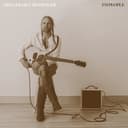
Mildred

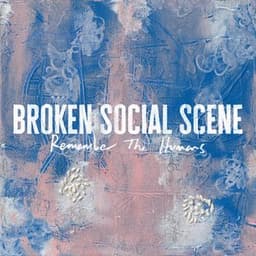
Remember The Humans

Remember The Humans

Broken Social Scene

love songs and spiritual recollections

love songs and spiritual recollections

big long sun

I Don't Know Right From Wrong: Lost La Peste 1976 - 1979 Vol. 1

I Don't Know Right From Wrong: Lost La Peste 1976 - 1979 Vol. 1

La Peste

Double Nickels on the Dime

Double Nickels on the Dime

Minutemen

I keep coming back to the Mildred album. The title track has a bit of Lambchop in it:

Elsewhere, the new Broken Social Scene album, which I want to give a more considered opinion on once it’s settled. I don’t think it quite matches You Forgot It In People or Broken Social Scene, but hearing the band reunited with producer Dave Newfeld is a treat.

big long sun and La Peste I’ve talked about already, and the Minutemen LP appears on track play count alone—it’s a double. I was pleased to see it ranked highly in Rolling Stone’s list of 100 greatest punk albums, a list I have plenty of feelings about, you’ll not be surprised to hear.

Lastly, Acetone. I’m amazed I’ve never come across them before—they recorded four albums and I like them all. A fascinating mix mostly straddling slowcore and alt-country, with a bit of Beach Boys and Velvets in there too. No idea what the consensus is on their best work but York Blvd. is the one I’m on at the moment.

The last Friday of May was busy for new releases. Paul McCartney, Kurt Vile, Iceage, Guided By Voices, Greg Mendez, Boards of Canada… the listening pile is growing faster than I can keep up. June will be a busy month.

Red Hot Photo Committee

Red Hot Photo Committee

National Photo Committee·2026·Ever/Never Records

The “cowboy punks” tag has been following National Photo Committee around, and it fits: all the instrumentation and song structure of a typical Americana band, with the slacker attitude turned up a few notches. The analogue is Tiberius’s farm emo; a genre tag self-applied with enough wink to deflect, accurate enough to stick.

The Chicago four-piece describe themselves on Bandcamp as a band “that sounds like they grew up in Virginia and got kicked out of college in Olympia,” which was enough to make me play the album immediately. The David Berman influence is everywhere, and perhaps it’s just the corner of music I’m currently in, but his ghost is loud right now. You can hear it in Max Bottner’s double entendres and wry lines delivered with a perfectly straight face. At one point a phone goes off mid-song and nobody seems bothered. Bottner’s deep baritone does most of the storytelling. The richness of his voice makes him sound older than his years, and you eagerly sit round and listen to what he has to say.

This sort of thing usually comes across as half-arsed or throwaway. Red Hot Photo Committee is neither. It’s a polished, serious record delivered with a glint in its eye and no small amount of swagger.

love songs and spiritual recollections

love songs and spiritual recollections

big long sun·2026·[no label]

Big Long Sun started as Jamie Broughton on his own and is now an eight-piece, though you wouldn’t always guess it from the recordings. Broughton still tracks most of it himself in a Brighton bedroom on a Tascam 244, and the other seven turn up to add detail rather than thicken the mix. love songs and spiritual recollections is their third album in eighteen months, which would normally be cause for suspicion, but the songs don’t sound rushed.

It’s psych-pop with folk-pop instrumentation, and the eight members are used sparingly. ‘heavy (on your mind)’ is a good example: nothing it does is individually complicated, but the song slowly piles up until it sounds full without ever sounding crowded. That restraint runs through most of the record.

The warmth of the playing keeps pulling against the lyrics, which are not warm. Not always dark either: more often aloof and guarded, hinting at something rather than explaining it. Broughton has called one of the singles “a dark, paranoid folk anthem for the spiritually insecure mind,” which gives you the temperature, even when the arrangements are doing their best to disguise it.

MAITREYA CORSO

MAITREYA CORSO

Maya Hawke·2026·Mom+Pop

Maya Hawke’s voice is imperfect and endearing. Lyrical themes flit between existential whimsy and the kind of self-examination that celebrity tends to provoke. The production keeps things warm and unfussy, which suits her. An impressive folk-pop record from someone who could easily have settled for the day job.

Fenceline

Fenceline

Mildred·2026·Dogday Records

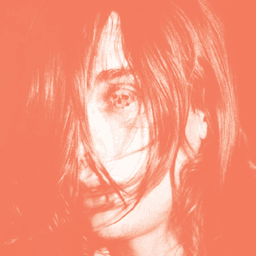
The easy comparison would be Berman or Malkmus relocating to northern California and making a CSNY record. Wry couplets about workplace mediocrity, theologians, fish fingers, all set to a gently rocking country-rock backdrop. But the easy comparison isn’t quite the right one. Mildred are four roughly equal parts—Henry, all sharing vocals and writing—as a result the songs feel passed around the room rather than handed down from a bossy frontman.

Age matters too, perhaps. This is a debut by friends who started living together in their early thirties and ended up writing some songs; what emerged has none of the showy push of a younger band. “Charlie” ambles along on accordion and horn, “Cobwebs” has a brisk motorik thing going underneath some genuinely bleak lines, and “Fish Sticks” lands its chorus with unhurried confidence. The whole thing sounds like it was played live in a room, their interviews suggest that more or less it was.

It’s warm, confident, relaxed, reminiscent of plenty of wonderful things without being in thrall to any of them. The kind of record that turns up on a friend’s stereo and you ask what it is.

Carve

Carve

Kathryn Mohr·2026·The Flenser

Lo-fi riffs to drone out to? Simultaneously reminiscent of Jeff Buckley’s demos that comprise Sketches for My Sweetheart the Drunk—particularly “Your Flesh is So Nice”—and Grouper. Sit with it a few times for the structure and melodies to make themselves clear.

City of Careless Angels

City of Careless Angels

Blaketheman1000·2026·Pizzaslime Records

Across its run city of careless angels moves through bedroom folk, glitched electronics, lo-fi power pop and something close to ambient rap, which makes for an uneven listen, though it mostly keeps its charm throughout. “Fall Asleep” and “Reason” recall early Alex G a little too closely. “Imaginary Woman” skirts the same line but the composition is strong enough to carry it, and the ooh-and-aah background vocals are the best thing on the record.

I’d have called myself reasonably well versed in the first wave of punk. Not an expert, but better than the average person who came to it two decades later. La Peste, though, had passed me by entirely. Boston’s first true punk band, as it turns out.

The original lineup managed one single, 1978’s “Better Off Dead”, before a personnel change and the slow fade that followed. Everything else stayed in the vault: practice-room recordings, 4-track loft tapes, and four songs cut by a pre-fame Ric Ocasek. The opener is one of the Ocasek four, and it’s superb, all forward motion from the first bar.

You can hear where Mission of Burma and the Bush Tetras would go next, the angular Boston racket already half-formed here. Hard not to wonder what La Peste might have become with a few more years of their own.

Red Sun Rising

Red Sun Rising

Chris Brain·2026·Big Sun Records

This is the first I’ve heard of Chris Brain, and it’s a quiet, easy record to sit with. Mostly acoustic guitar, picked rather than strummed, with other players filling in around it. There’s pedal steel, clarinet, violin and piano, but never much at once. The songs don’t change a lot as they go. Quite lovely.

Total Dive

Total Dive

Brown Horse·2026·Loose Music

Brown Horse are from Norwich, which you would never guess from Total Dive. The guitars are pure Crazy Horse and the pedal steel weeps on cue. A song called “Heart of the Country” arrives with no apparent irony. This is the modern Americana mould—the one Ovven, Ratboys, Florry, Tiberius and a dozen others are working right now, all of them tracing the same lines back through MJ Lenderman to Jason Molina, Lucinda Williams, Silver Jews, the Drive-By Truckers, Wilco, Uncle Tupelo.

The geography is the only misdirection. The other song titles (“Wreck”, “Sadness Reigns”, “Oblivion”) tell you exactly where the lyrics live, and they aren’t wrong.

The standout is “Twisters”. You could argue the record doesn’t move around much: the mood, the tempo, the instrumentation and the preoccupations hold fairly steady from start to finish. That’s a fair criticism of a less assured album. Here it isn’t one. When a band sounds this good doing one thing, the consistency reads as confidence rather than limitation, and I’m happy to sit in it for 45 minutes.

BODY SOUND

BODY SOUND

Whitney Johnson, Lia Kohl, Macie Stewart·2026·International Anthem Recording Co.

Body Sound is the debut from a Chicago trio who have paired off before in various combinations but never as a three. The method is improvise first, sculpt later: string and vocal sessions recorded across three locations, then run through analogue tape loops and effects before being recombined into eleven short pieces.

Some of it is very graceful. “dawn | pulse” opens in clear Max Richter territory. Others go in different directions: “burning | counting (sleeping)” gets agitated and screechy, and “cough | laugh” sets pizzicato plucks against a slowed, smeared swell of strings—the most overtly experimental moment. Cinematic while never becoming background noise.
Highway to Hell

Highway to Hell

Star Moles·Historic New Jersey Recordings

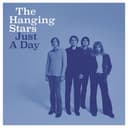
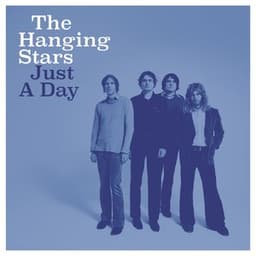
Star Moles is Emily Moales, a Philadelphia songwriter whose previous records leaned hard into knights, dragons and Arthurian legend. Highway to Hell puts all that aside: the opener spells it out (“Gone are the albums of knights and dragons / Gone are the kings and queens of Camelot”), and what’s left is the everyday, observed with a wry, slightly bewildered eye. Postmasters general, days off, parties skipped. Kevin Basko’s production at is loose in a presumably deliberate way: a flubbed intro on “The End” stays in, and stray vocal moments a tidier record would have scrubbed are left to breathe. It suits songs that sit in the same 70s Laurel Canyon folk-pop territory that you’ll have noted I keep finding myself drawn to lately—warm, melodic, hazy, but with arrangements that reward attention.

Hopeful Woman

Hopeful Woman

Natalie Jane HIll·2026·Dear Life Records

If you spent time this year with Courtney Marie Andrews’ wonderful Valentine, Natalie Jane Hill’s Hopeful Woman slots neatly alongside it. Same warm, country-tinged singer-songwriter mode the 70s did so well.
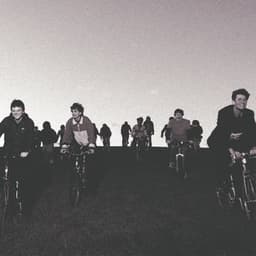
Hill’s voice gets compared to Hope Sandoval and Karen Dalton in the press notes; fair enough, though it’s a sturdier instrument than either. The arrangements are remarkable mostly for how much of them come from one person: Mat Davidson plays bass, fiddle, flute, keyboards and pedal steel, and the record feels fully populated without ever sounding crowded.
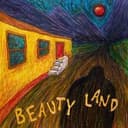
Henrietta

Henrietta

Hetta Falzon·Last Recordings on Earth

Billed as an EP, but at nine tracks Hetta Falzon’s debut is really an album. The twenty-one-year-old has Norah Jones’s vocal warmth and the writing to match—confessional, wry, occasionally cutting on ‘Belly Laugh’. She’s at home with spare piano (‘Freckles’) and the fuller build of ‘Switch It Off’ alike, and ‘I Hope You Notice Me’ is the one that makes the case for both her melodies and her voice. A perfect Sunday morning record.

MOO

MOO

King Tuff·2026·Thirty Tigers

King Tuff is Kyle Thomas, Vermont-based and well-connected. He’s toured with Ty Segall’s Muggers and fronts WITCH alongside J. Mascis, so the centre of gravity here is no surprise: 60s psych pop, 70s country rock, the same well that I’m always happy to see come back into fashion every few years. MOO offers nothing new. It’s just very well executed.

Recorded on the same Tascam 388 he used for his 2013 debut, the album swings between garage punk cuts and looser, more playful songs. ‘Stairway to Nowhere’ is at the glam end of power-pop and recalls David Vandervelde’s “Nothin’ No”, itself a Marc Bolan facsimile — Bolan being a clear influence on both men. ‘Invisible Ink’ is the most catchy thing here, even if it might inadvertently summon ‘Rock Got No Reason’ from School of Rock. ‘Crosseyed Critters’ is a country-rock stompalong sandwiched between garage cuts. ‘Delusions’ could be Cotton Mather, masters of a previous power-pop revival, doing a Tom Petty tribute. ‘Backroads’ closes things out on a feel-good note, and makes me want to hit play again.

Troubadour

Troubadour

Tiberius·2025·Audio Antihero

Troubadour is a record of genres in conversation. Sag uses on a melodic phrase that briefly nods at Smashing Pumpkins’ Today before settling into something that’s part alt-country, part emo. Other tracks lean folk, country, shoegaze, post-hardcore. None of this is the maximalist everything-at-once approach; the genres are deployed song by song, deliberately, with the range emerging across the album rather than crammed into individual tracks. Singer Brendan Wright calls it “farm emo”, which is both funny and accurate.

It’s a breakup album, but a quiet one. The lyrics circle reflection rather than recrimination, even when the music goes loud. If you want a single comparison, it’s Uncle Tupelo plus Modest Mouse—the alt-country sturdiness of one, the restless dynamics of the other.

Moab and Redwood are the standouts. Both let the band’s range surface inside a single song without losing the deliberate per-track approach that defines the rest of the record.

My New Band Believe

My New Band Believe

My New Band Believe·2026·Rough Trade

Cameron Picton’s first record outside Black Midi (a band whose shtick I never totally warmed to) and a tonal world away from Geordie Greep’s The New Sound, whose calypso pastiche left me cold. My New Band Believe is the Windmill alumnus I didn’t expect to like. Almost entirely acoustic, built from strings, woodwind, harpsichord and pianos stacked into something that keeps tilting underfoot, it has the orchestral curiosity of Van Dyke Parks without the kitsch. “Love Story” sits in the middle like a small domestic scene that won’t quite hold still. The whole thing is intriguing in a way I’m still working out, which is the better kind of intriguing.

Listening: April 2026

1,106 tracks in April 2026

Top artists: Al Green, Charlotte Cornfield, Tiberius

Hurts Like Hell

Hurts Like Hell

Charlotte Cornfield

Troubadour

Troubadour

Tiberius

Jessica Pratt

Jessica Pratt

Asher White

Red sky at morning

Red sky at morning

h. pruz

I'm Still in Love With You

I'm Still in Love With You

Al Green

Is Hurts Like Hell my favourite album of the year so far? I think it might be. My listening in 2026 keeps coming back to solo women writing from inside something difficult—Cornfield on the quiet weather of motherhood, Jessica Pratt’s debut (transfigured here by Asher White’s cover version), h. pruz circling dependency and control without landing too hard on either. I’m not sure there’s a tidier thread than that, so I’m not going to invent one.

Al Green was April’s Catalog Club pick, which sent me to several new-to-me albums, including I’m Still in Love With You and The Belle Album. I came in expecting singles plus filler and found something fuller—a man I’d mostly known for the biggest hits and the mistreatment of women, now sounding more searching and stranger than I’d given him credit for.

The other surprise is Troubadour by Tiberius, which I haven’t written about yet. I didn’t realise I’d been returning to it so often that it would clear dozens of other records in the count.

The World Is Not Good Enough

The World Is Not Good Enough

Sean Solomon·2026·Anti‐

Sean Solomon spent the better part of a decade fronting Moaning on Sub Pop before that band wound down, and went back to making animated videos for Run the Jewels and Unknown Mortal Orchestra in the quieter stretch that followed. The World Is Not Good Enough is his first solo record, on ANTI-, and it sounds like a record made by someone who took the long way round to it.

Hushed, melodic, personal; “Postcard” is the standout and “Black Hole” is the most honest: “I’m afraid if I have children / I might pass this sadness on”. Coping mechanisms, fears named rather than dodged.

Young Team

Young Team

Mogwai·1997·Jetset Records

I bought Young Team when it came out, back when £15 in HMV bought you an album you’d only ever read about—which meant playing it over and over until it gave up its secrets, partly because you had the time, partly because £15 was £15. Young Team confused me. It challenged me. It took a while to really click. Click it did.

“Yes I am a long way from home” sets the template—and, as it turns out, the template for Mogwai’s whole career: the gentle build, the sense of something unfurling, controlled bursts of noise punctuating the calm. “Like Herod” then takes that template and stretches it in every direction at once: longer, quieter, louder, more hypnotic, messier, more majestic. “Tracy” is unhurried and contemplative, a feeling magnified if you turn the volume up at the end and catch the phone conversation about what sounds like a sizeable physical altercation within the band. “R U Still in 2 It”, with its spare instrumentation, repeating refrain, and lyrics about a narrator trying to right a relationship that’s already gone, remains darkly affecting nearly thirty years on.

The sequencing is immaculate, culminating with “Mogwai Fear Satan”, which justifies its sixteen minutes and remains the best thing the band have ever done; apocalyptic, cinematic, the sound of a group throwing vast amounts of noise and feeling at a wall via a handful of chords and a few simple riffs and somehow constructing elegance out of it. The flute that arrives near the end sits atop the chaos and offers clear juxtaposition to the insistent drumming beneath.

Young Team doesn’t immediately come to mind when I list my favourite albums, and I sometimes wonder whether I’m too forgiving of the records I first heard as a teenager. This one passes the nostalgia test. It still thrills.

Jessica Pratt

Jessica Pratt

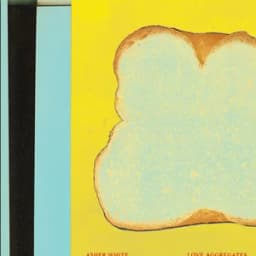
Asher White·2026·Joyful Noise Recordings

There’s something faintly perverse about covering an artist’s self-titled debut in full; you’re not just borrowing their songs, you’re borrowing the album that was meant to be them. Asher White seems to know this, and the strangeness is part of the appeal. Pratt’s 2012 record still sounds like nothing else—at once ancient and contemporary—and White, working from a louder, more experimental-pop palette, reimagines it without trying to outdo it. “Mountain’r Lower” becomes something akin to a proper rock song; “Casper” has blasts of noise. Elsewhere, prepared piano and synths drift in where there used to be only fingerpicked guitar. You don’t need to know the original, though, if you do, the recognition is half the pleasure.

svn4vr (“seven forever”) makes lo-fi folk–hip-hop hymns: fingerpicked guitar and quivering vocals pulled through the clipping, stray noise and loose structures of bedroom rap. Herts on fire is seven tracks of battered gospel, prayers addressed unambiguously to Yahweh, and it took me seeing “Hertfordshire” written in the lyrics to clock that “herts” is a home-counties pun; the accent sounds West Coast, not West Watford. The production is genuinely difficult. Things hiss and thud where you’d want them to settle, and the first pass is more confusing than rewarding. But the songs underneath are real, and the religious content is unusual enough (devotional without being either kitsch or knowing) that the mess starts to feel like the point rather than a failure of means. Qualified recommendation, and I’ll keep listening.

No Knock No Doorbell

No Knock No Doorbell

worriedaboutsatan·2026·This Is It Forever

Gavin Miller’s 20th album as worriedaboutsatan sees him swap the glacial longform ambient of past records for something tighter and more composed. The familiar ingredients are all here: dub bass, shoegaze guitar, post-rock patience, the melancholy synth washes. What’s new is the directness. Live drums and bass give some tracks a brisk, dancefloor edge the longform pieces never reached for, and ‘Icelandic Hardcore’ delivers its melancholy in sharper bursts than Miller’s usual mode. This is good work music for me, which might not read as a compliment, but is.

Wendy Eisenberg

Wendy Eisenberg

Wendy Eisenberg·2026·Joyful Noise Recordings

Eisenberg’s experimental instincts haven’t gone anywhere: the melodies still take unexpected turns and the guitar work still catches you off guard, but here they’re folded into something closer to the 1970s singer-songwriter tradition. Folky, with jazzy touches. The avant-garde scaffolding of earlier records gives way to songs that breathe differently, and Eisenberg’s voice sits at the centre in a way it hasn’t quite before. The lyrics circle memory, time and youth without tipping into overt nostalgia. If you’ve bounced off their more uncompromising work in the past, this is the way in.

Craving and Aversion

Craving and Aversion

Vulture Feather·2025·Felte

Many years ago someone handed me a copy of Wilderness’s self-titled album and I loved it: chanty vocals, post-punk instrumentation, a record I’ve returned to ever since. For reasons I can’t account for, I never looked into who the band were or what happened to them (they disbanded, it turns out, at the end of the aughts).

So it was a nice surprise when a friend sent me this four-track EP and it sounded immediately familiar in the right way. Vulture Feather is a Northern California trio featuring two former Wilderness members, and Craving and Aversion trades that band’s chanty restraint for something more muscular and hypnotic—post-hardcore-indebted art rock, to borrow their own framing. Colin McCann’s vocals still do that preacherly thing. The rhythms circle rather than resolve. A prompt to finally do my homework.

Red sky at morning

Red sky at morning

h. pruz·2025·Mtn Laurel Recording Co.

Hannah Pruzinsky’s work on this record is unmistakably that of a writer. They co-run a NYC music publication, and the LP shipped with a limited run of illustrated choose-your-own-adventure booklets. The songs share that sensibility: patient, considered, attentive to small pivots. Mostly hushed instrumentation—fingerpicked guitar and piano, but also Wurlitzer, sax, and synth—threaded with improvised interludes that keep the sequencing loose. The lyrics circle dependency and control without ever landing too hard on either.

The quiet gets broken twice, usefully. “if you cannot make it stop” pushes toward shoegaze: Grouper at one end of the dial, My Bloody Valentine at the other. This makes the surrounding calm feel like a choice rather than a default.

It's The Long Goodbye

It's The Long Goodbye

The Twilight Sad·2026·Rock Action Records

The Twilight Sad have spent twenty years working a seam between Scottish indie, goth, and shoegaze—three sounds that have drifted in and out of fashion around them. It’s The Long Goodbye is their first record in seven years, and it arrives at a moment when shoegaze has gone from a minor concern to something close to a default setting for young guitar bands. Good timing.

James Graham wrote the album while watching his mother live with early-onset dementia. I didn’t know that on first listen—I learned it later, and the lyrics rearranged themselves accordingly on the third or fourth pass. The title stops being a phrase and starts being a description.

Likely to find them their biggest audience yet, and deservedly so.

Hurts Like Hell

Hurts Like Hell

Charlotte Cornfield·2026·Merge Records

Cornfield’s first record since becoming a mother in 2023, and it sounds like the perspective shift has unlocked something. The pedal steel (courtesy of Adam Brisbin) threads through the album beautifully—country-tinged without ever tipping into full country, giving even the more vulnerable moments a warmth and sway. It’s her most collaborative album to date, and the guest list reflects good taste and good company: Buck Meek, Feist, Christian Lee Hutson. There’s something worth noting in that openness—becoming a parent seems to have made her more willing to let other voices in, both literally and in how she writes. The themes of renewal and perseverance through awkwardness land without ever feeling heavy-handed. Closer “Bloody and Alive” addresses motherhood most directly, spare and unguarded, and it earns the weight it carries. Highly recommended.

Listening: March 2026

785 tracks in March 2026

Top artists: Ramones, Lucinda Williams, Buck Meek

Rocket to Russia

Rocket to Russia

Ramones

Too Tough to Die

Too Tough to Die

Ramones

End of the Century

End of the Century

Ramones

The Mirror

The Mirror

Buck Meek

Till the Morning

Till the Morning

Brian D'Addario

A lot of Ramones this month. I really got into the first wave of punk in a big way in around '99, largely as a result of this 5-disc collection. The contents were very broad, and I explored The Clash and Television and Buzzcocks more than I did Ramones (or even The Sex Pistols). In recent months I’ve gone back and listened to some of the more notable punk releases in more detail, and this coincided with Ramones being the subject of Steven Hyden’s Catalog Club this month.

The Buck Meek album is good and earns its place on my ongoing ‘best of 2026’ list, and last year’s Brian D’Addario record is sadly underappreciated! Recommended if you like The Lemon Twigs, obviously.

Honora

Honora

Flea·Nonesuch

The story goes that Flea, having learned trumpet as a kid, devoted two hours each day for two years during the most recent RHCP tour to re-learning the instrument, with a commitment to recording an album at the end of it. This is it, and it’s great. Some good originals as well as covers—Nick Cave singing ‘Wichita Lineman’ isn’t something I knew I needed.