Infinite Digest↗
samizdat.co
A growing set of interactive visualisations from Christian Swineheart that map the internal structure of Infinite Jest—its scrambled chronology, endnote architecture, character networks, etc.
samizdat.co
A growing set of interactive visualisations from Christian Swineheart that map the internal structure of Infinite Jest—its scrambled chronology, endnote architecture, character networks, etc.
My son is in Year 3 and needs to practise times tables, spelling, and a handful of other subjects every night. The available apps were either too broad, too patronising, or too keen on subscription revenue. I built him something instead.
Fabian’s Quest is a learning app dressed up as an RPG. There’s a Daily Quest—37 questions across seven rounds covering maths, scales, spelling, grammar, science, history, and geography—designed to take about ten minutes. Short enough that it happens every night regardless of energy levels. You can also take a deeper dive into any of the subjects on their own. Each correct answer earns XP, streaks build, levels unlock. The kind of feedback loop that works on a child who treats everything as a competition.

It runs on an iPad, built with React and Vite, deployed to Cloudflare Pages. No backend—player data lives in localStorage, which is fine when your entire user base shares a device and a surname. The visual language is dark navy with gold accents, chunky rounded type, and the sort of progress bars that make eight-year-olds feel like they’re levelling up in a proper game. (Claude helped with the styling—it’s not my thing at all.)
Some details worth noting:
The name was Fabian’s idea. He wanted a quest.
A beautifully committed April Fools bit: what if Doki Doki Panic got the same sequel treatment Mario gave it, but in reverse? So there’s a Doki Doki Panic 3, a Doki Doki Panic 64, and so on—each one a reskinned Mario game, presented with a straight face as a genuine series retrospective. The mock-ups are genuinely impressive.
Showed this to my eight-year-old and it went down a storm: the floor piano, the bunk bed, the vending machine. Everything a kid fantasises about adulthood, which is to say everything that has nothing to do with actual adulthood.
www.lrb.co.uk
Leo Robson’s memoir of adolescent cinephilia. Six hundred films at the cinema in late-90s London, exercise books of star ratings, a filing cabinet of newspaper cuttings.
theamericanscholar.org
Jess Love acquires a binder of 92 DVDs from a neighbour’s porch and talks herself into a moral framework around physical media, parenting, and opting out of streaming. The real subject is the reminiscence bump: why the technologies of your formative years feel not just familiar but correct, and how nostalgia oscillates between protective instinct and self-delusion.
Bill Murray is doing something precise in the early scenes: playing a man who thinks he's too good for his surroundings. The film's quiet argument is that Phil is wrong, but not in the way you'd expect. It's not that Punxsutawney is secretly wonderful. It's that contempt is a kind of blindness, and the loop forces Phil to look. David Thomson described Murray as "the obdurately sensible persona responding to orderly madness," which is exactly right. Phil isn't heroic. He's competent and irritated, and the film's engine is watching competence and irritation gradually lose to something harder to name—attention, perhaps. Care. The kind of knowledge you can only acquire through repetition. Phil's arc from contempt to mastery to something like grace mirrors what happens when you watch anything often enough: you stop watching the plot and start watching the texture. I have seen this film perhaps fifty times. I'll watch it again soon.
www.gjlondon.com
George London on how AI coding tools can ensure open and free software regains a practical edge over closed services, like much SaaS. I have cancelled two iOS app subscription and one SaaS subscription in the last month after I realised I could make my own versions that meet my specific needs rather than those of the mass market. This article is an interesting counterpoint to some of what Anil Dash argues in “Endgame for the Open Web”.
I’ve relaunched my personal site. The one you’re reading. Not a newsletter, not a brand, not a Substack with a paid tier—just a place to put things.
You’ll find writing here, mostly short-form. Book reviews, album notes, the occasional essay when something lodges in my head and won’t leave. Links to things I’ve read and found worth passing along. There’s a timeline on the front page that pulls together everything—posts, film ratings from Letterboxd, books from Goodreads, games from Backloggd—into something resembling a log of what I’m paying attention to.
The design is intentionally quiet. Serif type, warm colours, no sidebar full of widgets demanding your attention. It’s meant to feel like a website rather than a platform, which is a distinction that shouldn’t need making but increasingly does.
I built the thing that runs this site, which is either admirable or pathological depending on your perspective. There’s a project post about that if you’re curious about the how. This post is more concerned with the why: I wanted somewhere to write that didn’t belong to anyone else, looked the way I wanted it to look, and didn’t try to optimise my words for engagement.
That’s it. No publishing schedule, no promises about frequency. Things will appear here when they appear.
785 tracks in March 2026
Top artists: Ramones, Lucinda Williams, Buck Meek

Rocket to Russia
Ramones

Too Tough to Die
Ramones

End of the Century
Ramones

The Mirror
Buck Meek

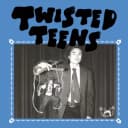
Till the Morning
Brian D'Addario
A lot of Ramones this month. I really got into the first wave of punk in a big way in around '99, largely as a result of this 5-disc collection. The contents were very broad, and I explored The Clash and Television and Buzzcocks more than I did Ramones (or even The Sex Pistols). In recent months I’ve gone back and listened to some of the more notable punk releases in more detail, and this coincided with Ramones being the subject of Steven Hyden’s Catalog Club this month.
The Buck Meek album is good and earns its place on my ongoing ‘best of 2026’ list, and last year’s Brian D’Addario record is sadly underappreciated! Recommended if you like The Lemon Twigs, obviously.

The story goes that Flea, having learned trumpet as a kid, devoted two hours each day for two years during the most recent RHCP tour to re-learning the instrument, with a commitment to recording an album at the end of it. This is it, and it's great. Some good originals as well as covers—Nick Cave singing 'Wichita Lineman' isn't something I knew I needed.
Nintendo's great gift in game design is knowing when to walk away from an idea. A mechanic is introduced, developed, twisted once, then discarded before it outstays its welcome. Some of these ideas—gravity flipping, bee suits, entire physics systems—are things another studio might base a whole game around. To Nintendo, they're a single level. A philosophy of creative abundance: you can afford to throw away good ideas when you trust yourself to have more. This does not translate to film. Galaxy is 99 minutes of TikToks, each scene a self-contained vignette stuffed with boss fights, power-ups, and environments from the games, stitched together with the connective tissue of a clip show. The production design is mostly gorgeous. But the introduce-develop-discard rhythm that makes a Mario game feel endlessly inventive makes a Mario movie feel exhausting. A game earns its density through play; a film needs to earn it through narrative. One rewards your attention with agency, the other just demands it. The movie can't decide whether it's for people who've played every game or people who've played none. Minor characters and references arrive in two flavours: unexplained cameos that flash past like inside jokes at a party you weren't invited to, or over-narrated introductions that grind the pace to a halt for the benefit of someone's confused parent. The makers of Super Metroid once said they didn't want to explain things to the player using too many words. They designed the world so you'd discover things yourself and feel like the discovery was yours. Galaxy never trusts you like that. It either assumes you already know, or it stops to make sure you do. No middle ground, and no discovery. What it actually resembles is the nostalgia-industrial complex it was born from. Callback upon callback, each reference feeding the next. The cinematic equivalent of a "do you remember this?" Facebook post: you see the thing, you recognise the thing, you feel a brief warmth, you move on. The first movie had plenty of this too, but it largely got away with it—the novelty of seeing these characters on screen carried the weight that the story couldn't. Galaxy doesn't have that excuse. With that charm spent, the underlying problem is fully exposed: the film mistakes recognition for emotion, as if reminding you that Lumas exist is the same as making you care about them. The irony is that Nintendo, in its actual games, resists this. Their whole competitive strategy is refusing incrementalism—competing on terms rivals aren't even considering. In games, they're fearless about throwing away what works and trying something new. This movie plays it safe in exactly the way their games don't. A greatest-hits tour where the songs are played too fast and in the wrong order—and where the thing that made Nintendo interesting in the first place, that willingness to let a great idea go, is the one thing they couldn't bring themselves to do here. My son loved it.
anildash.com
Anil Dash on how the open web is being eroded. At the end he talks about building “good AI” and alternative infrastructures. I wonder what concrete coordination, funding models and incentive structures would enable those projects to scale and compete with Big Tech before the open web’s critical institutions collapse?
A personal publishing system built to scratch a very specific itch: I wanted a Tumblr-style blog with editorial design sensibilities, and nothing that existed was quite right.
Showrunner is a headless CMS backed by Supabase and served through Next.js. It supports the post types I actually use—text, links, quotes, photos, albums—and pulls in activity from Letterboxd, Goodreads, Backloggd, and Pinboard to create a unified timeline of everything I’m reading, watching, playing, and bookmarking.
The design takes cues from Frank Chimero and Max MacWright: warm off-white backgrounds, a serif body column, restrained typography. Dark mode, naturally. The kind of site that looks like it was made by a person rather than a platform.
Some details worth noting:
The whole thing was built collaboratively with Claude Code—architecture decisions, implementation, the editorial restyle, all of it. That process deserves its own post at some point.
The name is borrowed from television production. The showrunner is the person responsible for the creative direction of a series. Felt appropriate for a system whose entire purpose is giving one person control over how their work appears on the web.
bundesletter.substack.com
The making of West Germany's 1990 World Cup shirt. Fair to call it ‘iconic’? I think so.
www.latimes.com
I’ve listened to Flea’s new album “Honora” several times since its release. The backstory is great: he played trumpet as a kid, then devoted two hours a day across two years of RHCP touring to re-educating himself on the instrument, promising to record an album at the end.
a.wholelottanothing.org
Matt Haughey on his woodworking practice. I can think of a few people who have started woodworking in the past few years. I don’t think I have the time, space or budget to join them, but perhaps one day—this all looks great.
I expected a materialistic thriller and I got an iPhone ghost story about grief. Quietly great!
I’m not always the biggest Tarantino fan. The cleverness is too often the point, the references fold in on themselves, the secondary meaning always matters more than the first. But I’ll say this: he makes a hell of a good movie now and again.
Very strange. Pretty good! Best new Pixar film for a while.