Skip to content

indie-rock

7 items

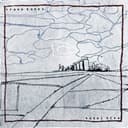
Total Dive

Total Dive

Brown Horse·2026·Loose Music

Brown Horse are from Norwich, which you would never guess from Total Dive. The guitars are pure Crazy Horse and the pedal steel weeps on cue. A song called “Heart of the Country” arrives with no apparent irony. This is the modern Americana mould—the one Ovven, Ratboys, Florry, Tiberius and a dozen others are working right now, all of them tracing the same lines back through MJ Lenderman to Jason Molina, Lucinda Williams, Silver Jews, the Drive-By Truckers, Wilco, Uncle Tupelo.

The geography is the only misdirection. The other song titles (“Wreck”, “Sadness Reigns”, “Oblivion”) tell you exactly where the lyrics live, and they aren’t wrong.

The standout is “Twisters”. You could argue the record doesn’t move around much: the mood, the tempo, the instrumentation and the preoccupations hold fairly steady from start to finish. That’s a fair criticism of a less assured album. Here it isn’t one. When a band sounds this good doing one thing, the consistency reads as confidence rather than limitation, and I’m happy to sit in it for 45 minutes.

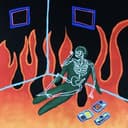
Highway to Hell

Highway to Hell

Star Moles·Historic New Jersey Recordings

Star Moles is Emily Moales, a Philadelphia songwriter whose previous records leaned hard into knights, dragons and Arthurian legend. Highway to Hell puts all that aside: the opener spells it out (“Gone are the albums of knights and dragons / Gone are the kings and queens of Camelot”), and what’s left is the everyday, observed with a wry, slightly bewildered eye. Postmasters general, days off, parties skipped. Kevin Basko’s production at is loose in a presumably deliberate way: a flubbed intro on “The End” stays in, and stray vocal moments a tidier record would have scrubbed are left to breathe. It suits songs that sit in the same 70s Laurel Canyon folk-pop territory that you’ll have noted I keep finding myself drawn to lately—warm, melodic, hazy, but with arrangements that reward attention.

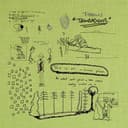
Troubadour

Troubadour

Tiberius·2025·Audio Antihero

Troubadour is a record of genres in conversation. Sag uses on a melodic phrase that briefly nods at Smashing Pumpkins’ Today before settling into something that’s part alt-country, part emo. Other tracks lean folk, country, shoegaze, post-hardcore. None of this is the maximalist everything-at-once approach; the genres are deployed song by song, deliberately, with the range emerging across the album rather than crammed into individual tracks. Singer Brendan Wright calls it “farm emo”, which is both funny and accurate.

It’s a breakup album, but a quiet one. The lyrics circle reflection rather than recrimination, even when the music goes loud. If you want a single comparison, it’s Uncle Tupelo plus Modest Mouse—the alt-country sturdiness of one, the restless dynamics of the other.

Moab and Redwood are the standouts. Both let the band’s range surface inside a single song without losing the deliberate per-track approach that defines the rest of the record.

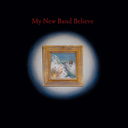
My New Band Believe

My New Band Believe

My New Band Believe·2026·Rough Trade

Cameron Picton’s first record outside Black Midi (a band whose shtick I never totally warmed to) and a tonal world away from Geordie Greep’s The New Sound, whose calypso pastiche left me cold. My New Band Believe is the Windmill alumnus I didn’t expect to like. Almost entirely acoustic, built from strings, woodwind, harpsichord and pianos stacked into something that keeps tilting underfoot, it has the orchestral curiosity of Van Dyke Parks without the kitsch. “Love Story” sits in the middle like a small domestic scene that won’t quite hold still. The whole thing is intriguing in a way I’m still working out, which is the better kind of intriguing.

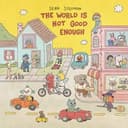
The World Is Not Good Enough

The World Is Not Good Enough

Sean Solomon·2026·Anti‐

Sean Solomon spent the better part of a decade fronting Moaning on Sub Pop before that band wound down, and went back to making animated videos for Run the Jewels and Unknown Mortal Orchestra in the quieter stretch that followed. The World Is Not Good Enough is his first solo record, on ANTI-, and it sounds like a record made by someone who took the long way round to it.

Hushed, melodic, personal; “Postcard” is the standout and “Black Hole” is the most honest: “I’m afraid if I have children / I might pass this sadness on”. Coping mechanisms, fears named rather than dodged.

Red sky at morning

Red sky at morning

h. pruz·2025·Mtn Laurel Recording Co.

Hannah Pruzinsky’s work on this record is unmistakably that of a writer. They co-run a NYC music publication, and the LP shipped with a limited run of illustrated choose-your-own-adventure booklets. The songs share that sensibility: patient, considered, attentive to small pivots. Mostly hushed instrumentation—fingerpicked guitar and piano, but also Wurlitzer, sax, and synth—threaded with improvised interludes that keep the sequencing loose. The lyrics circle dependency and control without ever landing too hard on either.

The quiet gets broken twice, usefully. “if you cannot make it stop” pushes toward shoegaze: Grouper at one end of the dial, My Bloody Valentine at the other. This makes the surrounding calm feel like a choice rather than a default.

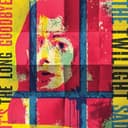
It's The Long Goodbye

It's The Long Goodbye

The Twilight Sad·2026·Rock Action Records

The Twilight Sad have spent twenty years working a seam between Scottish indie, goth, and shoegaze—three sounds that have drifted in and out of fashion around them. It’s The Long Goodbye is their first record in seven years, and it arrives at a moment when shoegaze has gone from a minor concern to something close to a default setting for young guitar bands. Good timing.

James Graham wrote the album while watching his mother live with early-onset dementia. I didn’t know that on first listen—I learned it later, and the lyrics rearranged themselves accordingly on the third or fourth pass. The title stops being a phrase and starts being a description.

Likely to find them their biggest audience yet, and deservedly so.