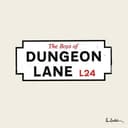
The Boys Of Dungeon Lane
Five years in the making, recorded in gaps between tour legs, and produced by Andrew Watt, who gives The Boys of Dungeon Lane the same modern sheen as McCartney’s other recent records. But everything underneath points backwards. Nostalgia abounds, which is nothing new: plenty of his best Beatles songs were wistful, often about the specific people and places that make other people’s nostalgia bearable. Here the memories get more specific still, and more autobiographical than he’s usually allowed himself in song.
It opens with “As You Lie There” and an odd chord arpeggiated that Paul says he didn’t recognise—the whole album grew out of him worrying at it. That’s the McCartney method in miniature: go wildly experimental on one element while holding everything else steady, almost as a control. I think of it as “controlled experimentalism”, and it’s all over this record in small doses. “Never Know” turns its staccato “oh oh” vocals into something more rhythmic than melodic. “We Two” runs through actual sixties tape machines. None of it capsizes the pop song underneath.
Two strands run through the album. Some tracks are about the Beatles (“Days We Left Behind”, the single, premiered on BBC Radio Merseyside, is the most obvious); others are about his childhood and family. I prefer the second kind, and I say that as a serious Beatles fan. Usually loving something means wanting more first-person testimony of what it was like, but we’ve had several decades of Beatles talking about being Beatles. “Down South”—the literal story of Paul and George bonding over guitars—is charming, but the family songs cut deeper. “Home to Us”, the Ringo duet, is warm enough that on first listen I didn’t clock it was Ringo singing. “Salesman Saint” opens with horns and is really about his parents getting through the Blitz and postwar period, and how songs and laughter get people through.
The love songs hold their own too. “Ripples in a Pond” is a bright pop thing about a relationship starting; “Life Can Be Hard”, Paul in falsetto, thinning but still affecting, is its companion piece years down the line, reflective and grounded with a slight jazzy lean. “Momma Gets By” closes beautifully, a hint of Dixie jazz underneath.
Rob Sheffield, in Dreaming the Beatles, argues that Paul is the most Beatlesque of the Beatles: whatever problem you have with the band, it’s really a problem with Paul, and he’s the only one anyone bothers to hate. Tell him your Paul McCartney, he says, and he’ll tell you who you are. Hard, then, not to hear this as the last one. Thematically he’s cornered himself: you can’t give a life-retrospective at age 83 and then put out, say, ten obscure fifties covers a year or two later. But then again, that would be very Paul.